Crossing the Drake Passage on a yacht: what it is really like
Published 1 Oct 2026 · 3 min read
Everyone who dreams of Antarctica asks the same question first: how bad is the Drake? The honest answer is that it depends on the week, and that a good crew does not leave it to chance.
Why the Drake has its reputation
Between Cape Horn and the Antarctic Peninsula lies roughly a thousand kilometres of water with no land at all to the west or east. At these latitudes the westerly winds and the swell they raise circle the planet without meeting a single continent. The Antarctic Circumpolar Current, the largest ocean current on Earth, squeezes through the same gap. Low-pressure systems cross it every few days, one after another.
That is the reputation. The reality is that between those lows there are windows of moderate weather, and a small yacht crosses in the windows.
The weather window
We do not sail to a timetable. Before leaving the shelter of the Beagle Channel the skipper studies the forecasts and waits for a gap between depressions — sometimes we leave at once, sometimes we spend a day at anchor behind an island with the kettle on. Modern forecasts are reliable for four to five days ahead, which is about what the crossing takes.
A good window means wind from behind or abeam, a long swell rather than a steep sea, and a yacht that moves steadily, day and night. A poor one means reefed sails, a lot of spray and a quiet, concentrated crew. Most crossings include a little of both.
Life in watches
At sea the boat never stops, so the crew works in watches: a few hours on, then rest. Guests are welcome to join a watch, and most do. You learn to steer by the compass and by the feel of the waves, to trim a sail, to make tea without spilling it at twenty degrees of heel. At night you clip your harness on, watch the phosphorescence in the wake and understand, quite suddenly, how far from everything you are.
Nobody is obliged to stand a watch. A bunk, a book and the pilothouse windows are a perfectly good way to cross an ocean.
Seasickness, honestly
Most people feel unwell during the first day or two, and most people recover. A few things help more than anything else:
- start the medication your doctor recommends before we leave sheltered water, not after you feel ill;
- eat small amounts often, and keep drinking;
- stay warm, and spend time on deck looking at the horizon;
- sleep whenever you can — the body adapts while you rest.
By the third day almost everyone is eating at the table and asking for the helm.
How you know you are close
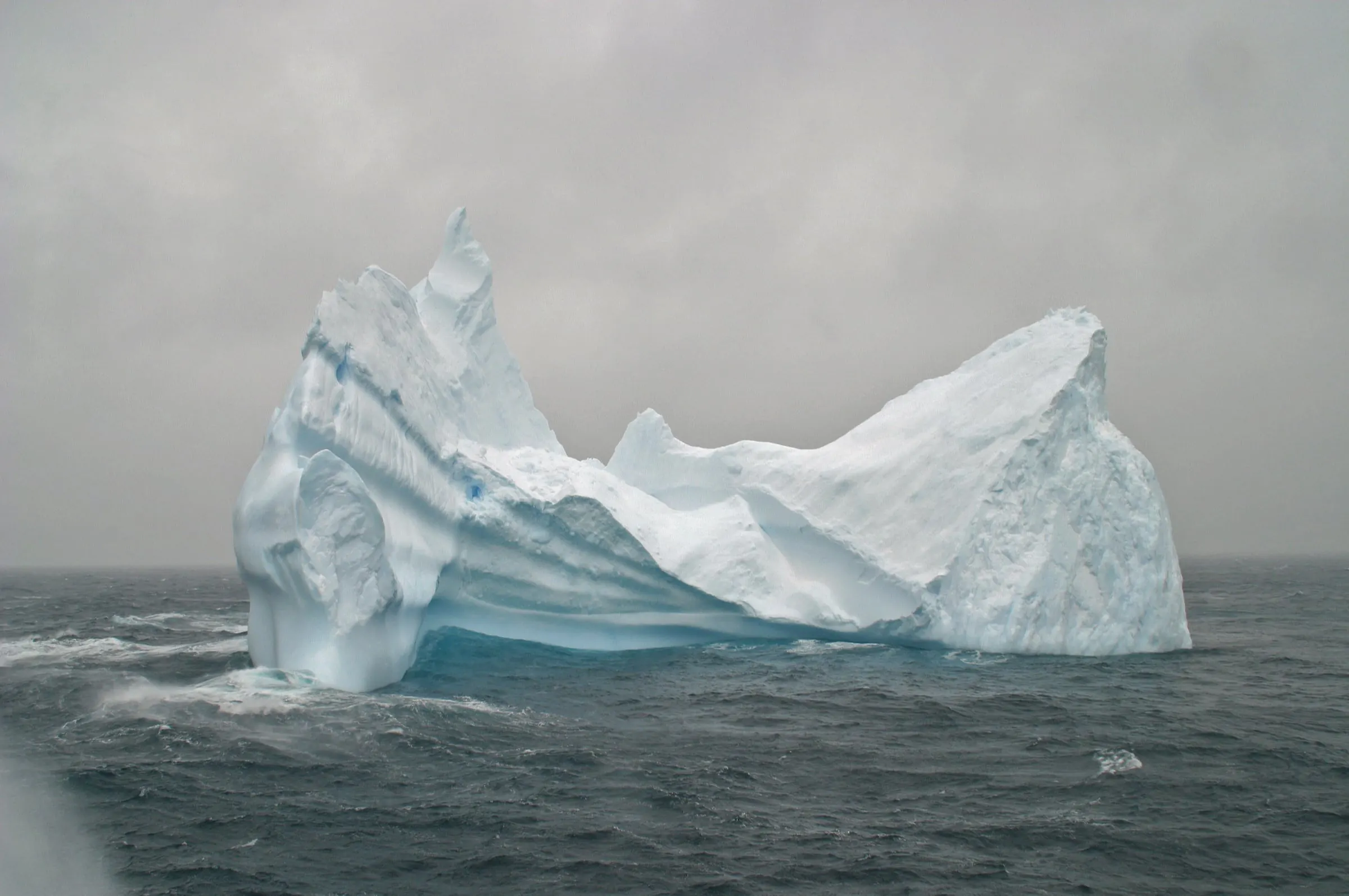
The first sign is the cold. At the Antarctic Convergence the sea temperature drops by several degrees within a few hours, the air sharpens and fog often follows. Cape petrels appear around the stern. Then, one morning, somebody on watch calls everyone on deck: the first iceberg, pale blue and far larger than it has any right to be.
Why it is worth it
You can fly over the Drake in two hours. People who sail it say the same thing afterwards: Antarctica means more when you have earned it. The four days give you time to leave the rest of the world behind — and by the time the South Shetlands rise out of the sea, you are no longer a visitor on a boat. You are part of her crew.