November or February? Choosing your month in Antarctica
Published 17 Sept 2026 · 2 min read
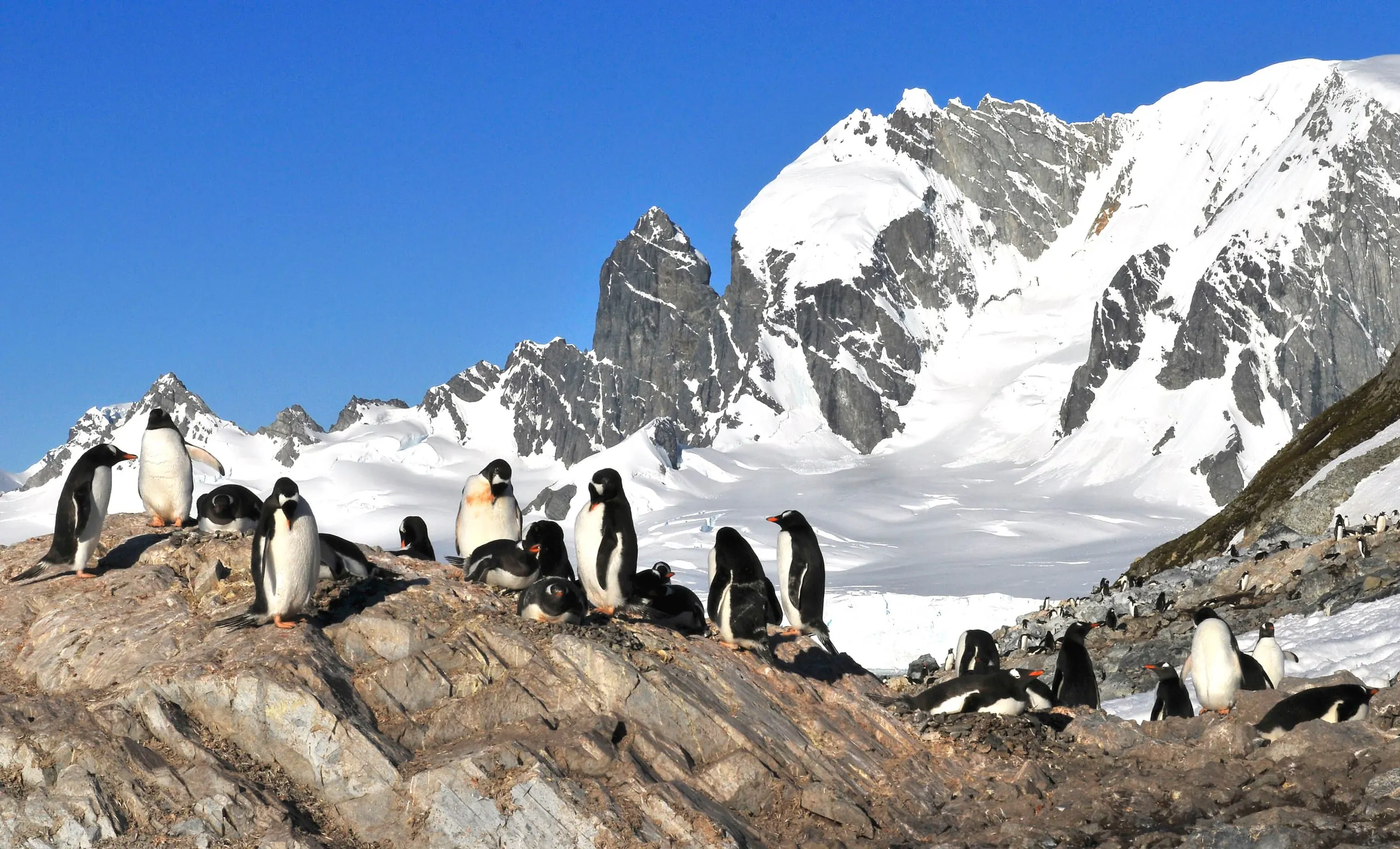
There is no bad month on the Antarctic Peninsula, only different ones. The season is short — from November to March — and the landscape, the light and the animals change from week to week. Here is what each part of the season is best for.
November and early December: the white season
This is Antarctica at its cleanest. Snow lies down to the waterline, untouched, and the icebergs are at their most sculptural. Penguins return to their colonies, court, argue over pebbles and build nests; by early December the first eggs are laid.
The price of this beauty is ice. Sea ice left from the winter can still block narrow passages in the south, so the route is less predictable and the skipper may choose different anchorages. Days are already long and the light is extraordinary.
Choose it for: pristine landscapes, photography, courting penguins, the feeling of arriving before everyone else.
Late December and January: high summer
The longest days of the year: at 65° South it never gets properly dark. Temperatures are the mildest of the season and the weather is, on average, the most settled. Penguin chicks hatch — first gentoos, then chinstraps and Adélies — and the colonies are loud and busy from morning to night. Seals haul out with their pups.
Choose it for: endless daylight, chicks, the widest choice of landings.
February and March: whales and sunsets
By late summer the sea ice has retreated to its minimum, which opens the route furthest south. Humpback whales, which arrive to feed through the summer, are now at their most numerous and most relaxed — this is the best time to see them close to the yacht, and to see bubble-net feeding. Penguin chicks are fledging and curious, adults are moulting, and fur seals arrive on the beaches.
Night returns, and with it real sunsets and sunrises that last for hours. The snow near the colonies is no longer white, and by March the weather becomes more changeable.
Choose it for: whales, sunsets, bold penguin chicks, the best chance of reaching the southern end of the route.
So which month?
If you want the Antarctica of the photographs — white, silent, untouched — go early. If you want life at full volume and daylight around the clock, go in the middle. If whales are the reason you are coming, go late.
And if you can only travel on one set of dates, do not worry about it. Nobody has ever come back from the Peninsula saying they chose the wrong month.